
Research Repository

Advanced Search
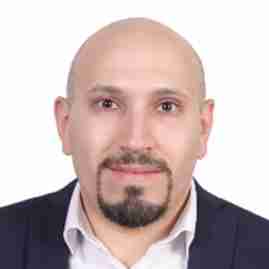
Biography Dr Al-Said Ahmad (Senior Member IEEE) is the Programme Director for Computer Science Undergraduate Programmes at Keele University, and a lecturer in Computer Science at the School of Computer Science and Mathematics at Keele University, UK. Amro is a Fellow of the Higher Education Academy (FHEA), a senior member of the IEEE and IEEE Computer Society, and the IEEE Technical Community on Cloud Computing and Services Computing.

He completed his PhD in Cloud Computing at the School of Computer Science and Mathematics of Keele University, UK. His thesis title is Scalability Performance Measurement and Testing of Cloud-Based Software Services. He obtained a BSc in Software Engineering from Philadelphia University in 2009 and an MSc in Computer Science from Amman Arab University in 2014.

Al-Said Ahmad’s main research interest is in the field of Cloud Computing, with a focus on the scalability issue in cloud-based software services, focusing on the technical aspect of the scalability delivery of such services. Other research interests explore cloud computing resilience using various methods, such as adaptivity, self-healing, and fault injection, including DDoS and other cyber-related issues, to develop adaptable and scalable systems/approaches that can operate correctly and withstand service and fault disruptions while being more resilient. In relation to Software Engineering, he is interested in Software Testing, Web Engineering, and Agile Methodology. Currently, he is leading several projects related to AI-driven solutions for addressing software problems, including LLMs for software testing generation.

Amro has reviewed papers for a range of computer science and digital education journals, including The Journal of Systems & Software (Elsevier), Computing (Springer), Concurrency and Computation: Practice and Experience (Wiley), Frontiers in Education (section Digital Education), and Jordanian Journal of Computers and Information Technology. Furthermore, he contributed to the organisation of international conferences, such as IEEE QRS, The BCS HCI 2022-2023; ACM ICCBDC 2022-ongoing; IEEE SSD 2021; IEEE PIMRC (Track 4) 2023; AICCC 2023-ongoing; and ICITA 2021.
Research Interests • Empirical investigation of scalability-resilience trade-offs in cloud-native services (leveraging fault-injection and chaos engineering).
• Automated software-testing pipelines in cloud environments, enhanced using LLMs or AI techniques, focusing on quality, coverage and cost-efficiency.
• Domain-specific application of cloud/fog/edge computing (e.g., healthcare IoT) with an emphasis on performance, reliability and resilience.
• Evaluating and enhancing the resilience of cloud systems against Distributed Denial-of-Service (DDoS) attacks.
Teaching and Learning Current Teaching:
•CSC-30069 - Software Development Management (Credits: 15)
•CSC-44110 - Data Management and Cloud Technologies (Credits: 30)
Previous teaching at Keele:
•CSC-20057 - Cloud Computing
•CSC-30053 - Data Ethics, Security, and Governance
•CSC-30016 - Software Engineering Project Management
•CSC-40039 - Cloud Computing (MSc)
•CSC-20022 - System Lifecycles and Design

In his career, Amro has developed and delivered more than 17 PG/UG modules, including Software Maintenance and Evolution (MSc); Quality Assurance and Testing of Web Applications; Software Testing and Quality Assurance (MSc); Cloud Computing based Development; E-Commerce System Engineering; Object-Oriented Programming; Web System Analysis and Design; Web Process and Project Management; Web Software Engineering (MSc); Special Topics in Software Engineering; Social Networks; Advanced Operating Systems; Pre-Computer Skills; and Multimedia Systems.
PhD Supervision Availability Yes

This person contributes to the following UN Sustainable Development Goals:

SDG 4 - Quality Education

Ensure inclusive and equitable quality education and promote lifelong learning opportunities for all

SDG 9 - Industry, Innovation and Infrastructure

Build resilient infrastructure, promote inclusive and sustainable industrialisation and foster innovation